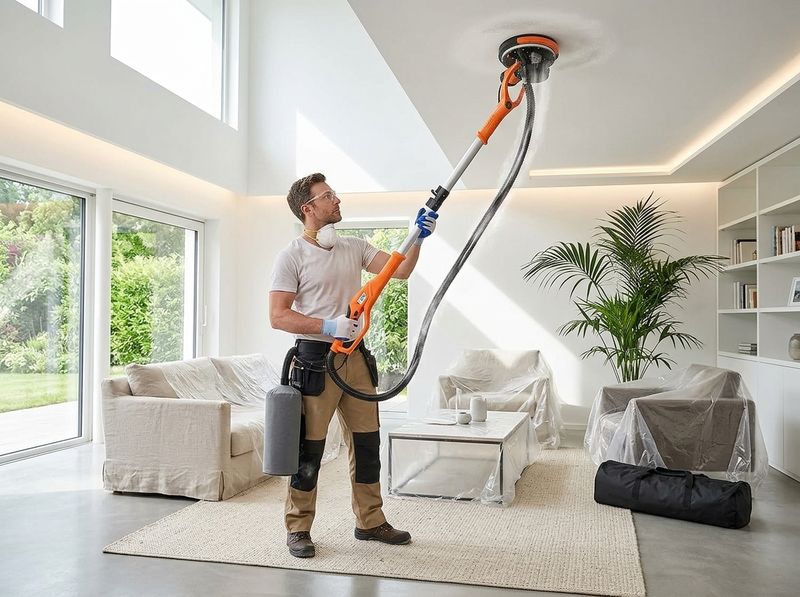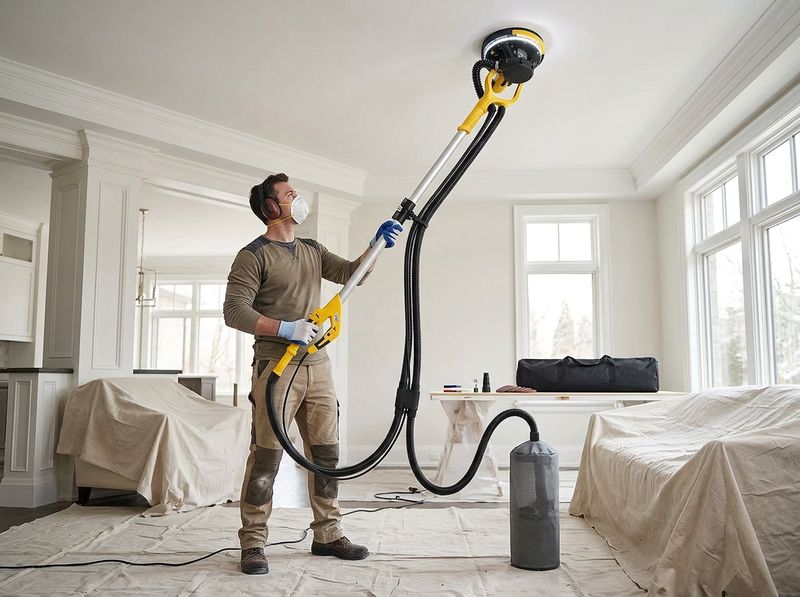
Electric Drywall Sander · Dual-Channel Dust Capture

The Electric Drywall Sander That Captures the Dust Before It Coats Every Surface

KUPERIA electric drywall sander overview

You finished hand-sanding the ceiling, then lost two more days wiping fine grit off your bed, your dresser, and the tops of the doors. The KUPERIA corded 120V electric drywall sander pulls up to 97-99% of that dust straight into the bag at the head, and the full system weighs 9.9 lbs for overhead work. Rated 4.4 stars across 331 verified buyer reviews. One owner still hit a suction drop after the first job: below is the parallel-disc technique that prevents it, and the 12-month warranty that covers it if it fails anyway.

  • Pulls up to 97-99% of sanding dust into the bag at the head when you keep the disc flat to the wall
  • 9.9 lbs as a full system, light enough to hold to a 9-foot ceiling without your arms quitting
  • 12-month warranty plus a 30-day return through the retailer if it does not fit your job

What every KUPERIA drywall sander includes

12-Month WarrantyBacked against defects, with two spare carbon brushes in the box.
97-99% Dust CaptureDual-channel vacuum pulls grit into the bag when the disc stays flat.
9.9 lb Full SystemLight enough to hold to a 9-foot ceiling without your arms quitting.
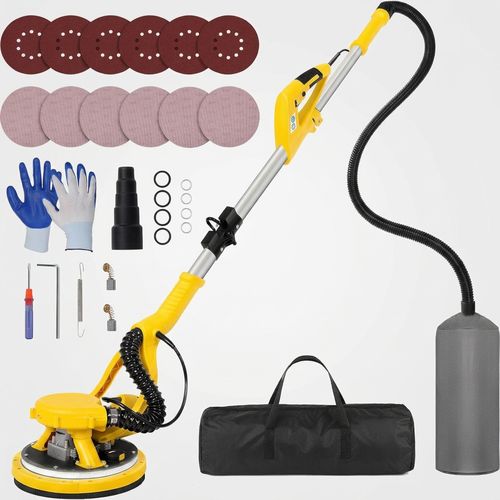
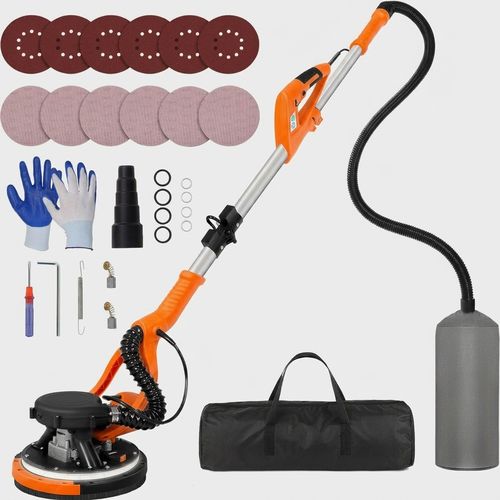
Complete Kit IncludedCarry bag, hose, extension rod, dust bag, and 12 sandpaper sheets.

Our products

The same dust-capturing build in an orange KU1O and a standard KU1Y: pick on color, then check which one is in stock today.

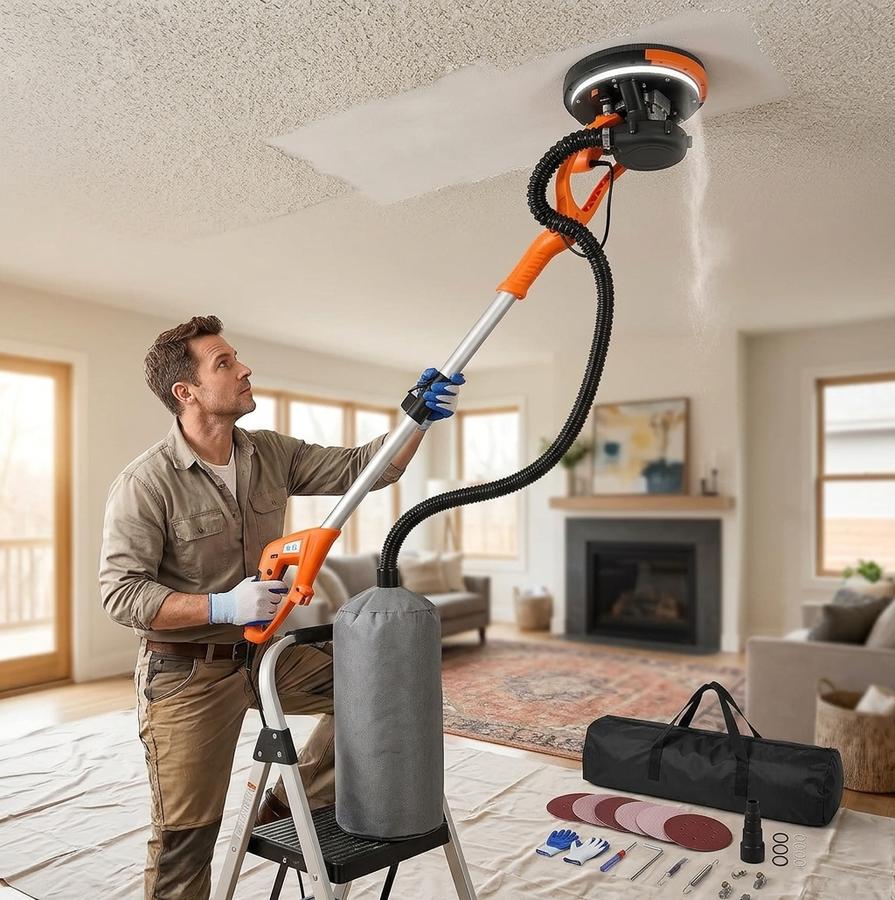
KUPERIA Drywall Sander KU1O (Orange)

KUPERIA Drywall Sander KU1O (Orange)

4.4 (331 reviews)

Hoist this orange KU1O to a bedroom ceiling and the full kit weighs 9.9 lbs in your hands, light enough that the high field gets done before your shoulders quit. Two vacuum channels inside the head split the airflow and pull the grit off the disc the instant it lifts, so it lands in the bag instead of in your hair, as long as you keep the disc flat to the wall. Where a budget single-port head dumps a cloud the moment you tip it, this one holds its pull across a long ceiling run. Backed by a 12-month warranty and a 30-day return through the retailer if it does not fit your job. Choose the orange finish for high visibility on a crowded jobsite.

  • 9.9 lbs as a full system, so a 9-foot ceiling gets sanded before your arms give out
  • Dual-channel head pulls dust off the disc at the source when held flat to the wall
  • 12-month warranty plus a 30-day retailer return window
Check price
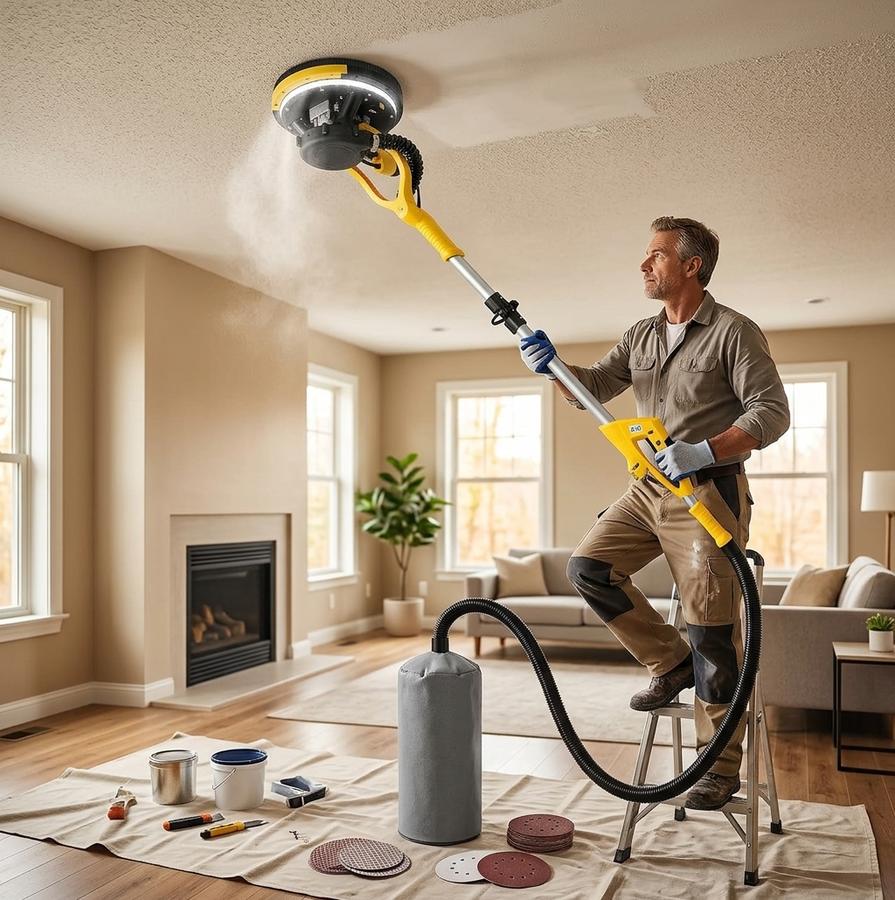
KUPERIA Drywall Sander KU1Y

KUPERIA Drywall Sander KU1Y

4.4 (331 reviews)

Reach for the KU1Y when a job swings from a delicate skim coat to stripping old paint in the same afternoon. The 7-speed dial feathers fresh mud at its lowest setting without cutting to the tape, then climbs for the hard coats that fight back, all driven by a copper motor that holds its speed under load. Switch to the grid sandpaper for the long ceiling passes and one sheet outlasts three basic ones, so six basic and six grid sheets do the work of about 24 standard sheets. Where a fixed-speed budget tool either stalls or scorches, this dial gives you the control. The standard finish ships ready to assemble with the included wrench and two spare carbon brushes.

  • 7 speeds from 800 to 1800 RPM, from a feather-light skim coat to grinding old paint
  • Grid sandpaper runs 3x longer than basic, so the kit lasts like about 24 standard sheets
  • Holds speed under load where a fixed-speed budget tool stalls or scorches the surface
Check price

Why DIYers Pick This Sander Over the Block and the Budget Tool

The reasons buyers reached for this sander instead of another weekend with a sanding block, each tied to a number on the spec sheet.

Stop Wiping Dust Off Everything for Days

Sand a full bedroom ceiling and the grit drops into the bag at the head, not onto your bed, your dresser, and your floor. The dual-channel vacuum pulls up to 97-99% of it while you work.

Cut a Two-Day Popcorn Ceiling Down to an Afternoon

Run the powered disc across a popcorn ceiling and the texture you used to scrape by hand comes off in one slow pass. The pure copper motor keeps cutting long after your arm would have given out.

End the Ladder Shuffle on a Vaulted Peak

Extend the rod from the floor and reach a 9-foot ceiling standing flat on the ground. No climbing down to drag the ladder six inches and climbing back up forty times a wall.

Proof, Not Another Spec-Sheet Promise

4.4 stars across 331 verified buyer reviews back the finish. One owner who lost vacuum suction after the first job was covered by the 12-month warranty, and the capture rate holds only when the disc stays flat, which the listing states plainly.

Wake Up to a Smooth Wall and a Clean Room

Prime the wall the next morning and run your hand across a finish with no ridges and no grit underfoot. The job that used to swallow a whole weekend ends clean by Saturday night.

Keep Sanding After Cheap Discs Would Have Worn Through

Switch to the grid sandpaper for the long ceiling runs and one sheet outlasts three basic ones. Six basic plus six grid sheets do the work of about 24 standard sheets on a real job.

From Box to First Clean Pass Without a Laminated Diagram

The steps from the carry bag to a dust-free ceiling, and the one technique that decides whether the vacuum actually works.

1

Extend the Rod to Your Ceiling

Pull the telescopic handle out to match your wall, anywhere from 3.9 to 5.5 feet, and lock the rod.

2

Attach the Hose and Bag

Clip the flexible hose onto the head, snap on the dust bag, and seat a disc on the hook-and-loop pad.

3

Dial the Speed to the Coat

Turn the dial to one of 7 speeds: low for a thin skim coat, higher to knock down popcorn texture.

4

Sand With the Disc Flat to the Wall

Keep the disc parallel to the surface as you glide it. That flat contact is what lets the vacuum pull up to 97-99% of the dust instead of leaking it into the room.

The Jobs This Sander Was Built Around

Not a parts list, but the real-renovation moments when you reach for this tool instead of the block.

KUPERIA Drywall Sander KU1O (Orange)

Sand a Whole Ceiling Without the Dust Following You Downstairs

You used to seal the doorways with plastic and still find drywall dust on the kitchen counter a floor below. Two pipes inside the head split the airflow, so the grit gets pulled off the disc and into the bag the instant it lifts, before it can drift down the hall.

  • Sand a 200 sq ft ceiling and the bag catches the grit at the head, so cleanup is one room instead of the whole floor.
  • The dual-channel design pulls dust through two pipes at once, which is why it clears faster than a single-port budget head.
  • Where a generic sander dumps a cloud the moment you tip it, this one keeps the suction working as long as the disc stays flat.
See the orange KU1O
KUPERIA Drywall Sander KU1O (Orange)

Dial It Down Before You Burn Through a Skim Coat

Push a single-speed tool into a fresh skim coat and it chews straight through to the tape. Drop this one to its lowest setting and the disc feathers the mud at 800 RPM, then climb to 1800 RPM when you hit a hard old paint ridge that needs real bite.

  • Set 800 RPM on a thin finishing coat and the disc skims the mud without gouging down to the joint tape.
  • The 8.5 Amp copper motor holds its speed under load, so the disc does not bog down halfway across a long wall.
  • Climb through 7 speeds to 1800 RPM for old paint, where a fixed-speed budget tool either stalls or scorches the surface.
See the standard KU1Y
KUPERIA Drywall Sander KU1O (Orange)

Reach the Corner the Round Head Always Misses

A fixed round disc stops two inches short of every wall-to-ceiling line, so you finish the whole room and then hand-sand the edges anyway. Pop the corner chassis off this head and the disc rides flush into the dead angle, so the edge gets the same powered finish as the open field.

  • Pull the detachable chassis off and run the disc tight along the ceiling edge that a round head leaves fuzzy.
  • The flat-sided corner shoe reaches the dead angle, so you stop switching to a sanding sponge for every join.
  • Sand the open wall, then clip the chassis back on for the next flat run, no second tool in your other hand.
Compare both models
KUPERIA Drywall Sander KU1O (Orange)

See the Scratch Before You Prime Over It

Sand a ceiling in flat afternoon light and the high spots hide until the primer goes on and every one shows. The LED ring throws raking light straight across the surface ahead of the disc, so a swirl or a proud seam catches a shadow while you can still fix it.

  • Sand a shaded hallway ceiling and the 360 degree LED ring rakes light across the surface, lifting scratches into view.
  • The light wraps the full head, so the shadow shows the flaw no matter which way you push the disc.
  • Catch a high seam under the LED while sanding instead of after the first coat of primer dries over it.
Check price
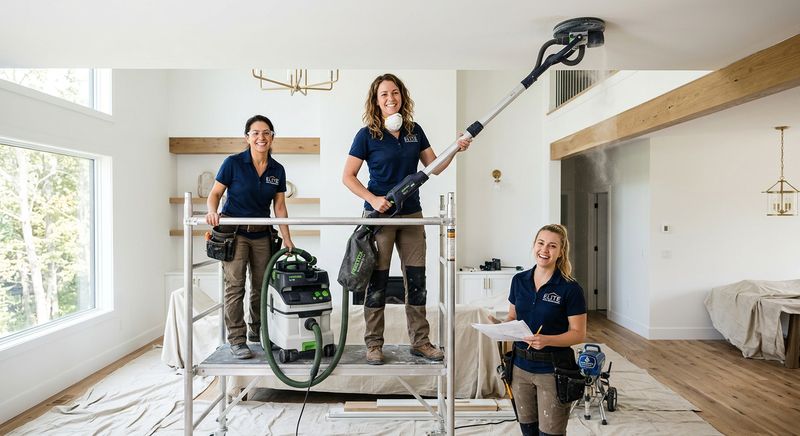
KUPERIA renovation team behind the drywall sanders

Built by Renovation Pros Who Got Tired of the Dust First

You have seen the budget sander that ships in a flimsy box, dies on the second ceiling, and buries the room in dust anyway. KUPERIA started from the other side of that frustration: a team of renovation professionals who spent years eating drywall dust on real jobsites and built the tool they wanted in their own hands. Their drywall sanders now rank #1 in the Power Drum Sanders category, and the answer to the cheap-tool worry is mechanical, not a slogan. Two vacuum channels inside the head pull the grit off the disc before it can cloud the room, and a pure copper motor holds speed where thin budget motors fade. You get a 12-month warranty behind it, so the one owner whose suction quit after the first job was made whole instead of stuck. Pick the orange KU1O or the standard KU1Y; both run the same core build, so you choose on color and stock, never on which one sands better.

Read the full KUPERIA story

What 331 Owners Report After the Dust Settles

A 4.4-star average across 331 verified buyer reviews; here is what owners write after the first ceiling.

★★★★★

Powerful, easy to handle, and the speed control is spot on. The dust extraction genuinely improved visibility and cut my cleanup. Left a smooth, even finish and saved hours over hand-sanding a full ceiling.

Daniel R.Verified Purchase · KU1O (Orange)
★★★★★

Made sanding drywall far faster than doing it by hand. The motor has real power, the handle is comfortable, and the dust collection kept my work area much cleaner. Reached the high walls and ceiling without trouble.

Maria S.Verified Purchase · KU1Y
★★★★☆

Nice tool. The motor is on the loud side, but it stood up to my first 600 sq ft job with no issues. The extendable handle made the ceiling reachable without dragging the ladder around all day.

Tom B.Verified Purchase · KU1O (Orange)
★★★★★

The extendable handle is a big advantage for ceilings and high areas, no constant ladder climbing. Dust collection keeps things clean, and the included discs and carry bag make it great value for the work it does.

Priya K.Verified Purchase · KU1Y
★★★★☆

Great for large-scale drywall sanding, so much quicker than a block. Keep the disc flat and the suction holds. One pass on the popcorn ceiling and the texture came down. Comfortable to use for a long session.

Greg M.Verified Purchase · KU1O (Orange)
★★★★★

From the first use you feel the build quality. Includes plenty of sanding discs for different surfaces plus the accessories. The suction kept the area clean and the ergonomic handle reached the ceiling without a problem.

Alyssa W.Verified Purchase · KU1Y

Spec by Spec Against the Budget Box and the Pro Tool

How this sander measures up against the generic online tool and the premium pro brand, on the specs that decide an overhead ceiling job.

SpecKUPERIABudget Generic ModelsPremium Pro Models
Dust capture at the headUp to 97-99% with dual-channel vacuumSingle-port, frequent cloudingHigh, with separate HEPA extractor
Full-system weight overhead9.9 lbs (8.5 lbs at the head)Often 12-14 lbsLight, at a premium price
Variable speed7 levels, 800-1800 RPMSingle or 2-speedVariable, electronic
Corner accessDetachable corner chassisFixed round headOptional edge accessory
Reach from the floorTelescopic 3.9 to 5.5 ftOften fixed lengthModular pole, sold separately
Warranty12 months, 2 spare carbon brushesShort or none1-3 years

From the First Ceiling to the Fourth Renovation

What lands on your doorstep, what the first job feels like, and what keeps the tool running a year of weekends later.

Day 1

Open the carry bag to the sander, the extension rod, the flexible hose, the dust bag, and 12 sandpaper sheets. Assemble it in minutes with the included wrench, and if the folded kit looks wrong for your job, the 30-day return through the retailer sends it back free.

Week 1

Knock down the popcorn ceiling you have been avoiding, then feather the patch over the old doorway. The grit drops into the bag, so you wipe one room down on Sunday instead of vacuuming the whole house.

Month 1

Run through the 6 basic and 6 grid sheets across a few rooms, swapping to grid for the long ceiling passes where it outlasts the basic paper three to one.

Year 1+

When the motor finally lurches from worn carbon brushes, drop in one of the 2 spares from the box and keep sanding. The 12-month warranty covers anything the spares cannot.

What Owners Actually Worry About Before They Buy

The five doubts that stall the purchase, and the spec, technique, or warranty that answers each one straight.

The Dust Cloud That Coats the Whole House

Kill the cloud that used to hang in the air for an hour after every sanding session. The dual-channel vacuum strips the grit off the disc at the head, so the dust drops into the bag instead of settling on the kitchen table two rooms away.

Targets the #1 drywall-sanding complaint owners raise: airborne dust

The Second Day Lost to Cleanup

End the ritual of wiping every ledge, sill, and baseboard the morning after. Pull most of the dust into the bag while you sand and the post-job cleanup shrinks from a whole day to a single room wipe-down.

The Ladder Shuffle on a High Ceiling

Strip away the climb-down-and-reposition cycle that turns a 9-foot ceiling into a workout. Extend the rod to 5.5 feet and sand the high field standing flat on the floor, moving the whole wall before your boots leave the ground.

The Dead Corner the Round Head Skips

Stop finishing the open wall and then hand-sanding every edge by hand anyway. The detachable corner chassis rides the disc flush into the wall-to-ceiling line, so the join gets the same powered finish as the rest.

The Suction That Drops After the First Use

Toss the worst-case fear last: one owner reported the vacuum quit after the first job. Most suction drops trace to the disc tilting off the wall, so keeping it flat restores the pull. If it is a real defect, the 12-month warranty plus the 30-day retailer return covers the replacement.

Honest framing: capture holds when the disc stays parallel; failures are warranty-backed

Who Reaches for This Sander

The four people who get the most out of it, and the two jobs it was never built to do.

The First-Timer Facing a Whole Popcorn Ceiling Alone

You have never sanded a ceiling and the popcorn texture covers the entire living room. Drop to a low speed, keep the disc flat, and the powered head does the scraping your shoulders would never finish by hand.

The Weekend Renovator Whose Crew Vanished Before Sanding

The drywall went up, then the help disappeared right before the worst part. One person on the floor with the extension rod can sand a full room of walls and ceiling in an afternoon, alone.

The Solo Contractor Tired of Hauling a 14-lb Sander Overhead

You run residential jobs and your arms feel every pound by the third ceiling. At 9.9 lbs for the full system, the overhead reach stops being the part of the day you dread.

The Skeptic Burned by a Budget Tool That Died Fast

Your last cheap sander quit on the second ceiling and buried the room in dust. The copper motor, the 12-month warranty, and 331 verified reviews are the reasons to risk it again.

When to Skip This Sander

  • Skip this if you need to grind off heavy plaster or strip thick mortar: it finishes coats and joint compound, not heavy material removal.
  • Not the right fit if you want a fully cordless tool for a site with no outlets, since this runs corded off a 120V household circuit.

Drywall Sander Questions, Answered Straight

The questions owners ask before they buy, from dust capture to carbon brushes, answered without the sales gloss.

What is an electric drywall sander, and how is it different from hand-sanding?

An electric drywall sander is a corded power tool with a spinning disc on a long handle that smooths drywall, ceilings, and plaster from the floor. Against a hand block, it cuts the hours and the arm strain, and a built-in vacuum pulls most of the dust into a bag instead of leaving it to coat the room for days.

Who is the KUPERIA drywall sander built for?

DIY renovators tackling a whole room or whole house, and residential contractors who want lighter overhead reach, get the most from it. A first-timer can knock down a popcorn ceiling solo, and a solo pro can finish walls and ceiling in an afternoon without a crew. It is not built for heavy plaster grinding or thick mortar removal.

What surfaces can it handle?

The disc adapts to drywall, ceilings, floors, paint coatings, and plaster, which covers most residential renovation surfaces. It shines on finishing coats and joint compound, and it strips old paint off plaster walls. The job it is not meant for is heavy material removal, where proper mudding and a light sanding pass is the better route.

Will it knock down a popcorn ceiling, or just finish smooth drywall?

Popcorn ceiling removal is one of its core jobs, named right on the tool. Run the disc across the texture at a higher speed and it scrapes the popcorn down in slow passes while the bag catches the grit. The same tool then feathers the smooth finish coat afterward, so one sander handles both stages of the ceiling.

Would a drywall sander actually save me time on a whole-house renovation?

Owners who switched from manual sanding report the dedicated tool dramatically cuts the time and physical strain of a big job. The powered disc covers a wall in a fraction of the strokes a block takes, and pulling most of the dust into a bag removes the multi-day cleanup. On a whole house, the saved hours add up fast.

What is the difference between the KU1O and KU1Y models?

Both run the same core build: the 8.5 Amp copper motor, the dual-channel vacuum, the 7-speed dial, and the telescopic handle. The KU1O is the orange finish, easy to spot on a busy jobsite, and the KU1Y is the standard finish. Pick on color preference and which one is in stock, not on performance, since they sand identically.

Is there a warranty, and what happens if the motor stops mid-project?

A 12-month warranty backs the tool. If the motor lurches or quits mid-job, the usual cause is worn carbon brushes, and two spares ship in the box so you can swap them with the included tools and keep going. If a fresh set of brushes does not fix it, the warranty covers the repair or replacement.

What do I do if the vacuum suction drops after the first use?

Most suction drops trace back to the disc tilting off the wall, which breaks the seal and lets dust leak past the head. Hold the disc flat and parallel and the pull returns. One owner did report a genuine vacuum failure after the first job, and that is exactly what the 12-month warranty plus the 30-day retailer return are there to cover.

Is the 97-99% dust-capture figure real, or marketing?

The up-to 97-99% capture is a real rating with a stated condition: keep the sanding disc parallel to the wall. Flat contact lets the dual-channel vacuum strip the grit off the disc at the source. Tilt the head and the seal breaks, so the rate falls. The listing states the caveat plainly rather than hiding it, which is the honest version of the claim.

How powerful is the motor?

An 8.5 Amp pure copper motor drives the disc, which holds its speed under load instead of bogging down halfway across a long wall. That power lets it strip old paint and knock down popcorn texture, not just polish a finish coat. Copper windings handle sustained sanding sessions better than the thinner motors in many budget tools.

Does the variable speed actually matter, or is it a gimmick?

The 7 speeds from 800 to 1800 RPM change what jobs the tool can do safely. The lowest setting feathers a fresh skim coat without cutting through to the joint tape, while the top end grinds hard old paint that a single-speed tool would either skip over or scorch. Matching speed to the coat is what prevents both swirl marks and burn-through.